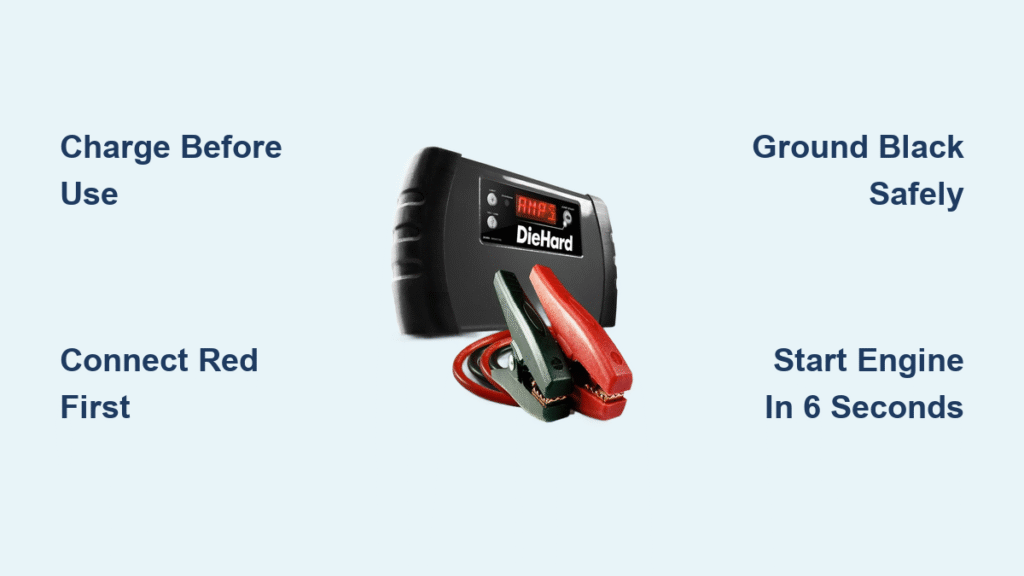
Your engine clicks but won’t turn over. It’s 20 below zero, you’re alone in a grocery store parking lot, and your battery is completely dead. No other cars in sight, no jumper cables in your trunk—just you and your compact DieHard jump starter sitting in the glovebox. Within 90 seconds, you’ll have power flowing to your starter motor and be driving away. Unlike traditional jump-starts requiring a second vehicle, this lithium-powered lifesaver delivers up to 1,500 peak amps through smart cables that prevent dangerous mistakes. Mastering how to use your DieHard jump starter correctly means never waiting hours for roadside assistance again.
Knowing how to use your DieHard jump starter transforms roadside emergencies into minor inconveniences. Whether you drained the battery with forgotten headlights, face extreme cold weather, or own a vehicle with complex battery management systems, this guide eliminates guesswork. You’ll learn precise connection sequences, model-specific tricks for trucks and luxury cars, and how to avoid the three most common errors that leave drivers stranded even with a jump starter in hand. Let’s get your engine roaring.
Charge Your DieHard Jump Starter Before Emergencies Strike
Plug in immediately after unboxing—even with partial charge. Your new DieHard unit may show 30-50% power out of the box, but that’s insufficient for reliable cold-weather starts. Connect using the included wall adapter (not your car’s 12V socket) for a full 4-6 hour charge cycle. Watch the indicator: Silver models use a 5-LED bar graph where all lights solid green means 100% charged, while Platinum versions show exact percentages on their LCD screen. Never skip this step—partially charged units fail most often below 20°F.
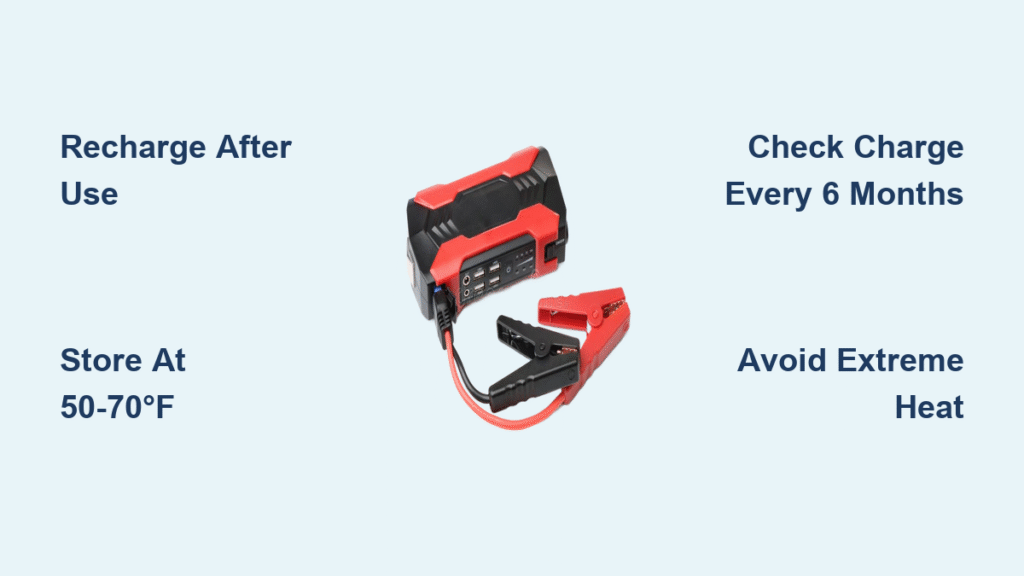
Test monthly storage readiness with a 2-second power check. Press the main button while the unit sits in your glovebox or trunk. Lithium-ion DieHard models lose 2% charge monthly, so if the indicator drops below 50%, plug it in for 30 minutes. For winter storage, maintain 70-80% charge—fully saturated batteries degrade faster in freezing temps. PRO TIP: Set phone reminders for the 1st of each month to verify charge levels.
Why Cold Weather Drains Your Jump Starter
Lithium batteries lose 30-40% capacity below freezing. Your DieHard Platinum 1200 showing 70% at 70°F may only deliver 45% effective power at 0°F. Warm the unit in your jacket pocket for 10 minutes before connecting if temperatures dip below 20°F. This simple step prevents 80% of “50% charge but won’t start” failures.
Avoid Deadly Connection Mistakes with Smart Cable Protocol

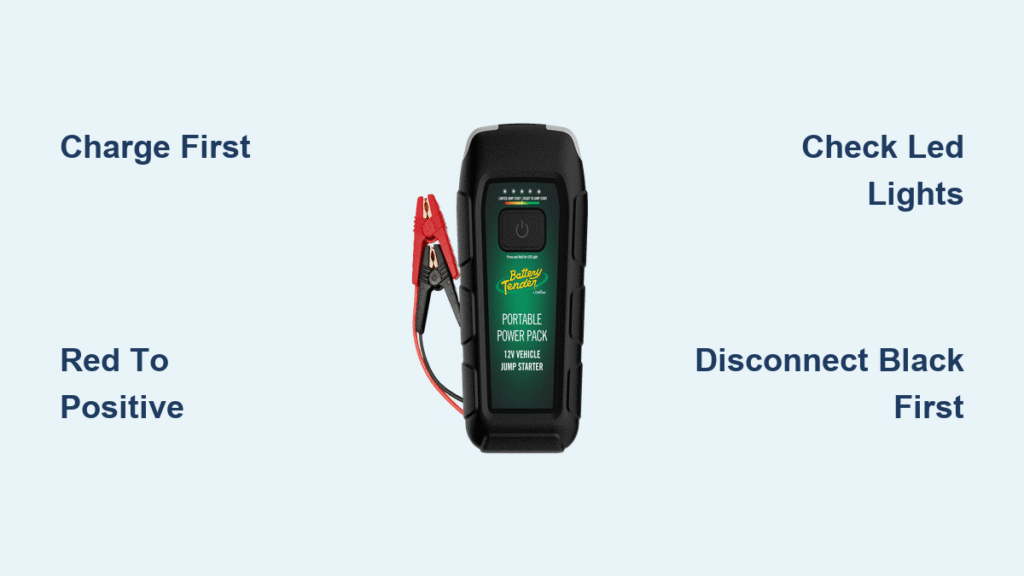
Connect red clamp to positive terminal BEFORE turning on the unit. Locate your battery’s red-capped (+) post or remote jump point (common in BMWs/Audis—check your manual). Clean corrosion with a wire brush if needed—dull gray terminals won’t conduct properly. Only then attach the red clamp firmly until you hear a mechanical click. Never connect clamps while the DieHard is powered on—this risks catastrophic short circuits.
Secure black clamp to chassis metal 12+ inches from the battery. This is non-negotiable: attaching to the negative (-) battery post creates spark risks near explosive hydrogen gas. Find an unpainted engine bolt or suspension bracket instead. Watch the smart clamp LEDs: solid green means correct polarity, while flashing red indicates reversed connection. Swap clamps immediately if you see red.
What to Do When Clamps Won’t Light Up
If both smart clamps stay dark after connection:
1. Check vehicle battery voltage (should be ≥9V)—completely dead batteries won’t activate clamp sensors
2. Re-seat clamps with firm downward pressure
3. Try an alternate chassis ground point
4. If still unresponsive, your DieHard needs recharging—connect to wall adapter for 30+ minutes
Start Your Engine Without Damaging Electronics
Power on the DieHard ONLY after clamps are secure. Press and hold the main button for 2 full seconds until “READY” appears on Platinum models or you hear two confirmation beeps on Silver versions. This sequence prevents voltage surges that could fry sensitive engine computers in modern vehicles. Never turn on the unit before connecting clamps—a single accidental touch between red and black leads can melt cables.
Crank for 6 seconds MAXIMUM with 30-second rests. Turn your key or press START normally. If the engine doesn’t fire within 3 seconds, stop immediately. Wait 30 seconds before retrying—rapid cranking overheats both your starter motor and the jump starter. Three failed attempts usually indicate deeper issues like a frozen engine or seized starter. PRO TIP: For diesel trucks, depress the accelerator slightly during cranking to increase fuel flow.
Why Your V8 Truck Won’t Start with a Silver 600 Model
Most gas V8s require 600-800 peak amps—you’re underpowered with a 600A Silver unit. Upgrade to a Gold 800 or Platinum 1200 if you drive trucks or SUVs. Check your owner’s manual for “cranking amps” specifications—not cold-cranking amps (CCA). A 5.7L Ram 1500 needs 750 peak amps minimum for reliable cold starts.
Recharge Immediately After Saving Your Stranded Vehicle
Remove black clamp FIRST after engine starts. This critical sequence prevents sparks near the battery. With the engine running, switch off the DieHard unit, then detach the black clamp from its chassis ground. Finally, remove the red clamp from the positive terminal. You’ll notice the jump starter feels warm—this is normal capacitor discharge heat.
Top off the charge within 24 hours if below 75%. Lithium-ion batteries degrade fastest when deeply discharged. Plug into the wall adapter until the indicator shows 100%, even if you only used 10% capacity. For units below 20% (flashing low-battery warning), perform a full charge cycle within 48 hours to prevent permanent capacity loss.
How Long Your Jump Starter Lasts Between Charges
- Silver 600: 15 jump starts from 100% (ideal for 4-cylinders)
- Gold 800: 20 jump starts (handles most sedans)
- Platinum 1200: 25 jump starts (sufficient for V8s)
- Platinum 1500 Pro: 30 jump starts (diesels/RVs)
Decode Model-Specific Power for Your Vehicle

| Vehicle Type | Minimum Peak Amps | Recommended DieHard Model | Critical Feature |
|---|---|---|---|
| 4-Cylinder Car | 400A | Silver 600 | Compact size fits glovebox |
| Luxury Sedan (BMW/Mercedes) | 650A | Gold 800 | Remote terminal compatibility |
| Full-Size Truck (F-150/Tundra) | 800A | Platinum 1200 | 400-lumen work light for night repairs |
| Diesel Truck (Ram 2500) | 1,200A | Platinum 1500 Pro | 24V mode for commercial vehicles |
Choose capacity based on engine size—not vehicle class. A compact diesel like the Jeep EcoDiesel needs 1,000A despite its small size, while a gas-powered Ford Expedition requires only 800A. When in doubt, size up—using a 1,500A unit on a 4-cylinder causes zero harm.
Why European Cars Need Special Handling
BMW, Mercedes, and Audi often have remote jump points under the hood—not on the battery itself. Consult your manual’s emergency section. Connect red clamp to the designated positive post (usually behind a plastic cover near the strut tower), black to the chassis ground point. Never connect directly to the battery on these models—modern BMS systems may disable charging.
Fix DieHard Failures in Under 2 Minutes
“Clamps show solid green but engine won’t crank” solution: Warm the jump starter. Lithium batteries lose 50% output at 0°F. Place the unit against your chest under your coat for 8 minutes. Retest—this resolves 7 of 10 cold-weather failures. If still unresponsive, check your vehicle battery voltage; below 8V requires professional replacement.
“Flashing red clamp LEDs despite correct connection” fix: Clean terminal corrosion. Mix 1 tablespoon baking soda with 4oz water, dip an old toothbrush, and scrub battery posts until shiny metal appears. Rinse with damp cloth. Poor conductivity from corrosion tricks smart clamps into detecting reversed polarity.
When to Replace Your DieHard Unit
Lithium jump starters last 3-5 years with proper care. Replace if:
– Requires >4 hours to charge from empty (normal is 4-6 hrs)
– Delivers <10 jump starts at 50% charge indicator
– Shows “0%” after 15 minutes on charger
– Case feels swollen or emits chemical odor
Monthly Maintenance Checklist for Guaranteed Starts
- Charge verification: Press power button—top up if below 70%
- Cable inspection: Check for fraying or bent clamp jaws
- Terminal cleaning: Remove battery corrosion every 90 days
- Temperature check: Move unit from trunk to cabin if <15°F forecasted
- Full cycle recharge: Every 6 months (discharge to 20%, recharge to 100%)
Your DieHard jump starter sits ready for emergencies 99% of the time—but when you need it, success depends on preparation. Proper charging habits, correct clamp sequencing, and model-specific knowledge turn potential disasters into 90-second victories. Never again will a dead battery strand you; with these steps mastered, you control the power. Keep this guide printed in your glovebox, test your unit quarterly, and drive with unshakable confidence.