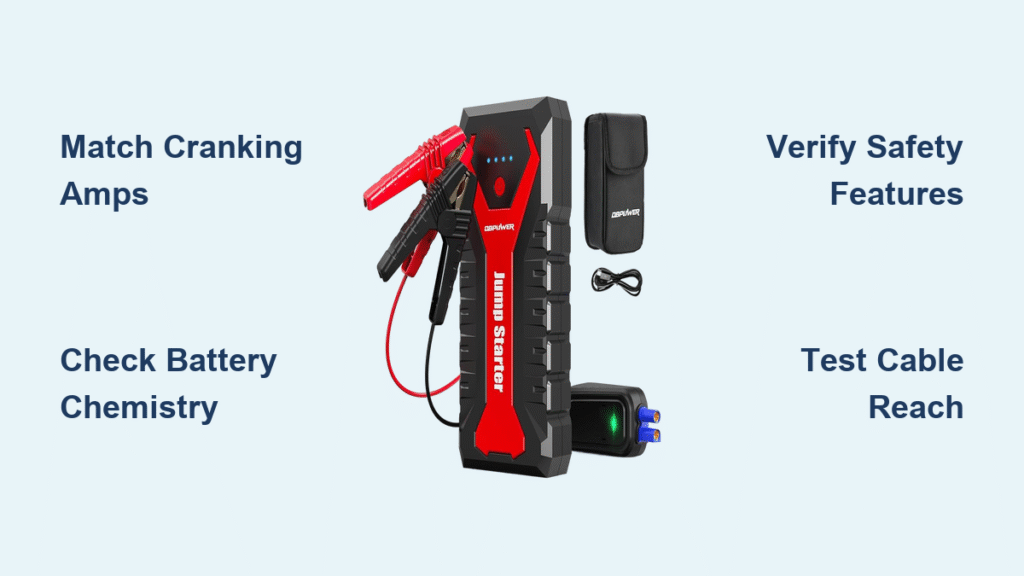
You’re running late, turn the key, and hear that hollow click-click-click. Your battery’s dead, you’re blocking the driveway, and no helpful neighbor is around with jumper cables. A portable jump starter could save your morning—but only if you picked the right one. This guide cuts through the marketing fluff to show exactly how to choose a portable jump starter that actually works when you need it most.
A portable jump starter is your pocket-sized power plant that revives dead batteries without another vehicle. Unlike bulky jumper cables, these compact devices deliver enough electrical muscle to crank your engine, then tuck away until disaster strikes again. The real challenge? Matching specs to your vehicle and lifestyle while avoiding costly mistakes.
Match Power Ratings to Your Engine Type
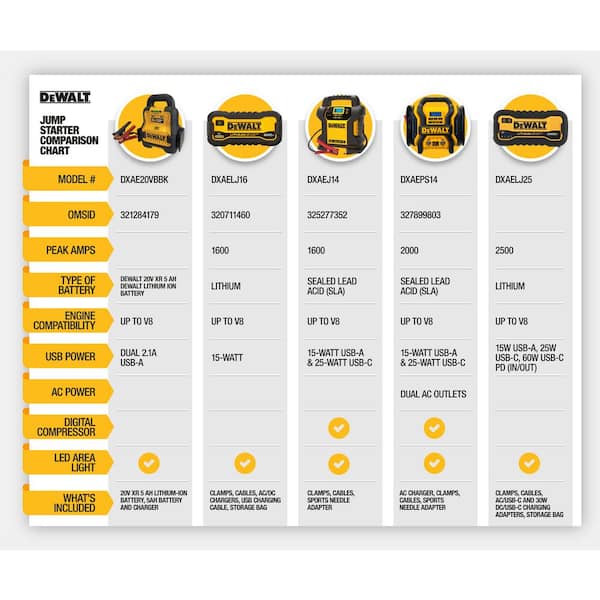
Decode Peak Amps vs Cranking Amps
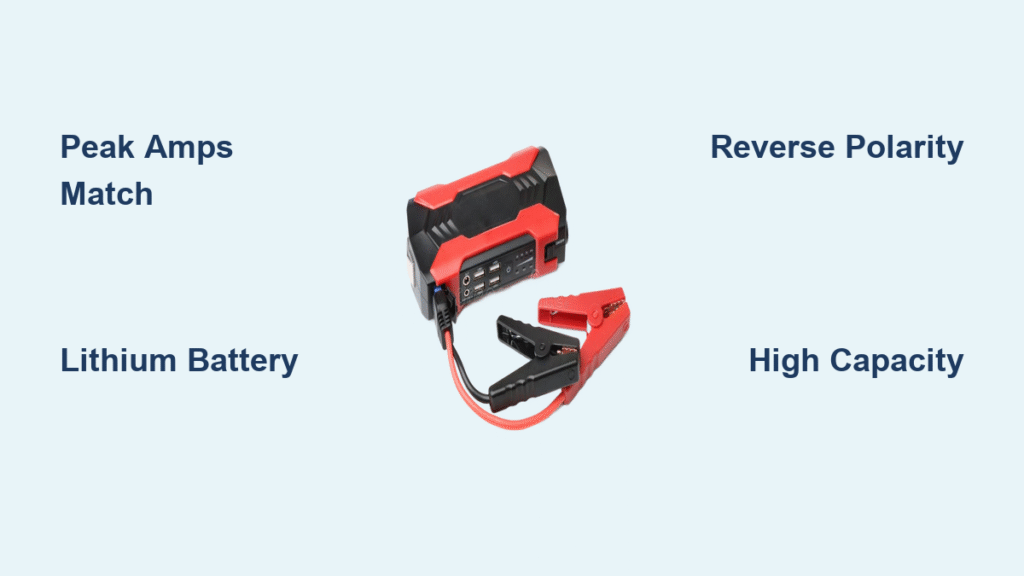
Manufacturers love advertising peak amps—the 20-millisecond burst your starter sees. But cranking amps (CA) matter most: that’s the sustained 30-second current your engine actually needs at 32°F. Check your battery label for its CA rating, then select a jump starter that meets or exceeds it.
Critical thresholds for how to choose a portable jump starter:
– 4-cylinder gas engines: 400-600 peak amps, 200-400 CA
– V8 gas or diesel: 1,000-2,000 peak amps, 500-800 CA
– Cold climates: Add 20% to CA requirements
Calculate Required Energy Storage
A 30-watt-hour unit might start your compact car once before needing recharge. A 100-watt-hour model handles 10-20 jumps. For frequent use or larger engines, prioritize watt-hours over flashy peak amp claims. If you drive a diesel truck or live where temperatures plunge below freezing, bump up your capacity requirement by 30%.
Select the Right Battery Chemistry for Your Climate
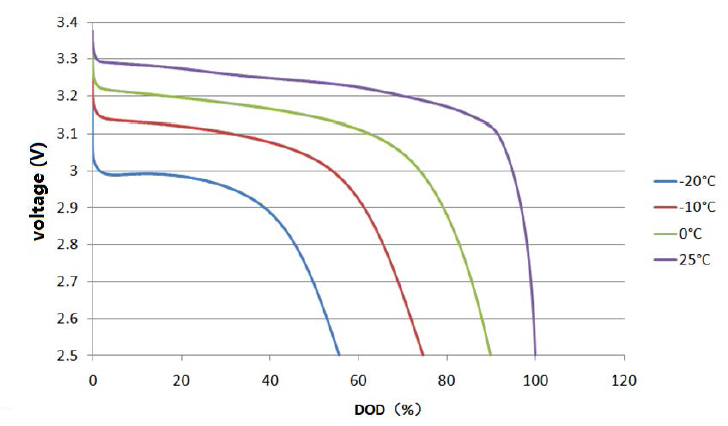
Lithium-Ion: Light but Temperature-Sensitive
These ultra-portable units (1-3 lbs) fit in your glovebox but lose 20-30% capacity below freezing. Store them indoors during winter and never leave them in a hot car—temperatures above 140°F can trigger thermal runaway. Perfect for occasional emergencies but risky for daily carry in extreme climates.
Lithium Iron Phosphate: The Hot Climate Hero
LiFePO₄ chemistry withstands temperatures up to 160°F and delivers longer lifespan. Slightly heavier than standard lithium but worth every ounce if you live where summer temps soar. Choose this when learning how to choose a portable jump starter for desert regions or vehicles parked outdoors.
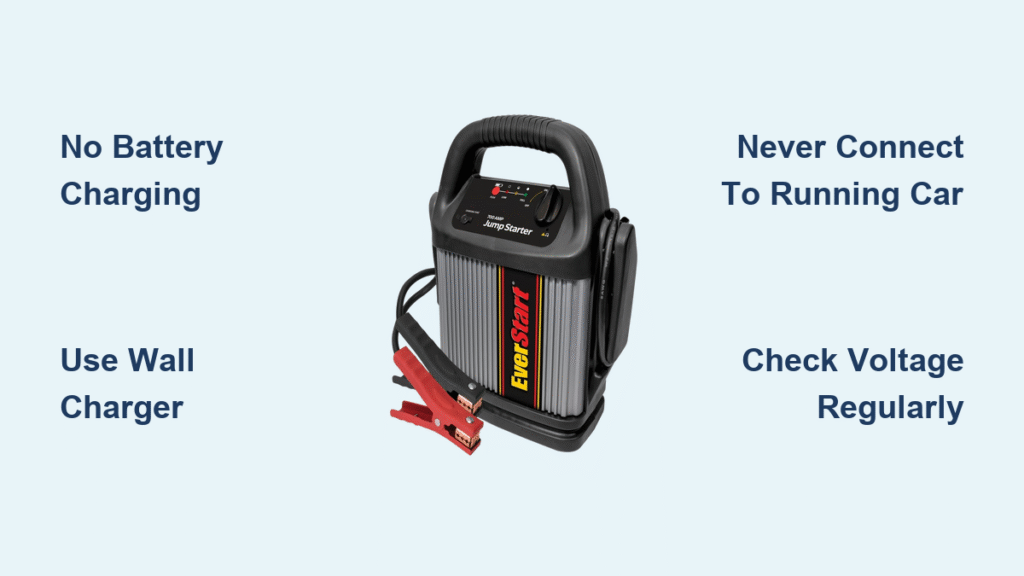
Skip Lead-Acid Unless Storing in Garage
Heavy and bulky lead-acid units tolerate temperature extremes better but weigh 15-25 pounds. They’re ideal for workshop use where portability doesn’t matter. For daily carry, lithium wins every time—just mind the temperature limitations.
Demand These Non-Negotiable Safety Features
Critical Protections You Can’t Skip
- Reverse polarity protection saves you from frying electronics when clamps get reversed
- Spark-proof clamps prevent dangerous arcing during connection
- Manual override starts completely dead batteries that confuse “smart” units
- Over-temperature shutoff prevents damage during repeated jump attempts
Clamp Quality Determines Success Rate
Flimsy clamps slip off battery terminals when you need them most. Look for solid copper jaws with strong spring tension and curved ends for side-post batteries. Short cables (under 12 inches) struggle with recessed terminals—measure your vehicle’s battery access before buying compact units.
Size for Your Storage Reality

Glovebox Warriors (1-2 lbs)
Units like the NOCO GB40 fit anywhere but work only for motorcycles and compact cars. They deliver 1-3 jumps per charge—perfect for commuters who rarely leave town.
Trunk-Ready Powerhouses (2-4 lbs)
This sweet spot balances portability with power for sedans and small SUVs. Models like the Clore JNC325 provide 10+ jumps and include USB charging for your phone during emergencies.
Workshop Titans (15-25 lbs)
Power-stations like the Stanley J5C09D stay in your garage. Their 400+ watt-hours handle multiple jumps while powering air compressors and coolers. Overkill for daily carry but essential for fleet managers.
Avoid These Costly Selection Mistakes
Oversizing for Your Vehicle
A 2,000-amp unit won’t start your Honda Civic better than an 800-amp model. You’ll pay extra for unused capacity while sacrificing portability. Match specs to your actual engine size—check your owner’s manual for CCA rating.
Ignoring Cable Length Constraints
Compact units often ship with 12-inch cables that can’t reach recessed batteries. Measure from your battery terminals to potential ground points before buying. If you drive a modern SUV with a trunk-mounted battery, you’ll need at least 18-inch cables.
Forgetting Climate Impact
Lithium units left in a 120°F car lose capacity permanently within weeks. Cold climates reduce effective power by 30%. When figuring how to choose a portable jump starter, factor in your local weather extremes—your future self will thank you during that midnight breakdown.
Smart Features Worth the Upgrade
Essential Extras That Save Time
- Multi-mode LED work light (steady/flashing/SOS) for nighttime emergencies
- Digital voltage display showing exact charge level—not just “low/medium/high”
- USB-C PD charging (18W+) for fast phone top-ups while waiting for roadside help
- 12V accessory port to power tire inflators after jump-starting
Skip These Gimmicks
Built-in Bluetooth speakers or FM radios add weight without value. Focus on starting power and safety first—entertainment features can wait until you’re safely home.
Your 5-Minute Selection Checklist
Step 1: Verify Your Engine Requirements
Find your battery’s CCA rating (usually printed on the label). Add 20% buffer if you live where winter temps drop below freezing. For a typical V6 SUV, you’ll need at least 800 peak amps and 400 cranking amps.
Step 2: Match Chemistry to Your Climate
- Daily carry in moderate climates: Standard lithium-ion
- Hot climates or frequent use: Lithium iron phosphate
- Workshop/fleet use: Lead-acid power-station
Step 3: Confirm Critical Safety Features
Check product specs for reverse polarity protection, spark-proof clamps, and manual override. Skip any model missing these—your car’s electronics aren’t worth risking.
Step 4: Test Fit in Your Vehicle
Place the unit in your intended storage spot (glovebox, under seat, trunk). Ensure cables reach your battery terminals with room to spare. Compact doesn’t help if it can’t connect when needed.
Maintenance That Prevents Failure
Monthly Check Routine
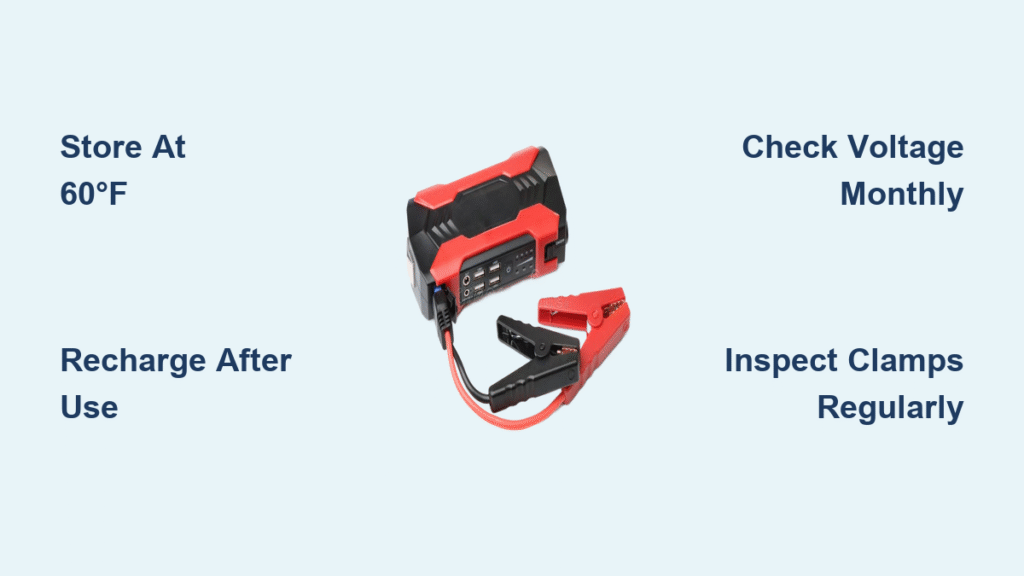
Spend 30 seconds checking your jump starter’s charge indicator. Top off if below 50%—lithium units self-discharge 2% monthly. A dead jump starter during an emergency defeats the whole purpose.
Quarterly Deep Care
- Recharge to 100% even if unused
- Inspect clamps for corrosion (clean with baking soda/water if needed)
- Wipe cables with a damp cloth to remove grease buildup
- Store in climate-controlled space (not your sweltering trunk)
Know When to Replace
Most lithium units last 3-5 years with proper care. If jump attempts fail despite full charge, or the unit won’t hold charge overnight, replace it immediately. Don’t wait for your first emergency to discover failure.
Real-World Compatibility Guide
| Your Vehicle | Minimum Specs | Recommended Model |
|---|---|---|
| Motorcycle/ATV | 300 PA / 150 CA | NOCO GB20 |
| Compact Car (4-cyl) | 500 PA / 250 CA | GOOLOO GP37 |
| Midsize SUV (V6) | 800 PA / 400 CA | Clore JNC325 |
| Full-Size Truck (V8) | 1,200 PA / 600 CA | Projecta IS1220 |
| Diesel Truck | 2,000 PA / 800 CA | GOOLOO GT4000 |
Pro tip: When in doubt, go one size up. That extra $30 beats waiting 45 minutes for roadside assistance in a snowstorm.
Choosing the right portable jump starter boils down to three things: matching power to your engine, selecting chemistry for your climate, and balancing features against portability. Test your unit monthly, store it properly, and you’ll never dread that dead battery click again. Your future self—racing to work while everyone else waits for tow trucks—will thank you.