Your car won’t start. It’s freezing outside, you’re already late for work, and all you hear is that dreaded clicking sound when you turn the key. A dead battery can ruin your entire day, but the Scatach jump starter in your glove box holds the solution—if you know how to use Scatach jump starter properly. This compact powerhouse can revive most vehicles in under five minutes, yet many drivers leave it unused because they’re unsure of the correct procedure.
Using a jump starter isn’t rocket science, but incorrect technique can damage your vehicle’s electronics or even cause injury. Follow this precise guide to safely jump-start your car with your Scatach unit, avoid the common mistakes that leave people stranded, and transform what could be a day-ruining emergency into a minor inconvenience.
Scatach Jump Starter Safety Checklist Before Use
Verify adequate charge level—check the LED indicator before heading to your vehicle. Three solid green lights mean you’re above 75% charge, two lights indicate 50-75%, and one light means you’re in the danger zone. If you see only one light or a flashing red indicator, charge the unit immediately—attempting a jump start with insufficient power can damage both your vehicle and the jump starter.
Perform a quick physical inspection:
– Check for cracks—any visible damage to the ABS housing means don’t use it
– Examine clamps—clean off green or white corrosion with a wire brush
– Inspect cables—stop immediately if you see exposed copper wire
– Test connections—wiggle both clamps where they meet the cables to ensure tightness
Park on level ground away from traffic, engage your parking brake fully, and put automatic transmissions in Park or manuals in Neutral. Remove metal jewelry—rings, watches, and bracelets can accidentally complete dangerous electrical circuits.
Scatach Device Components and Power Features Decoded

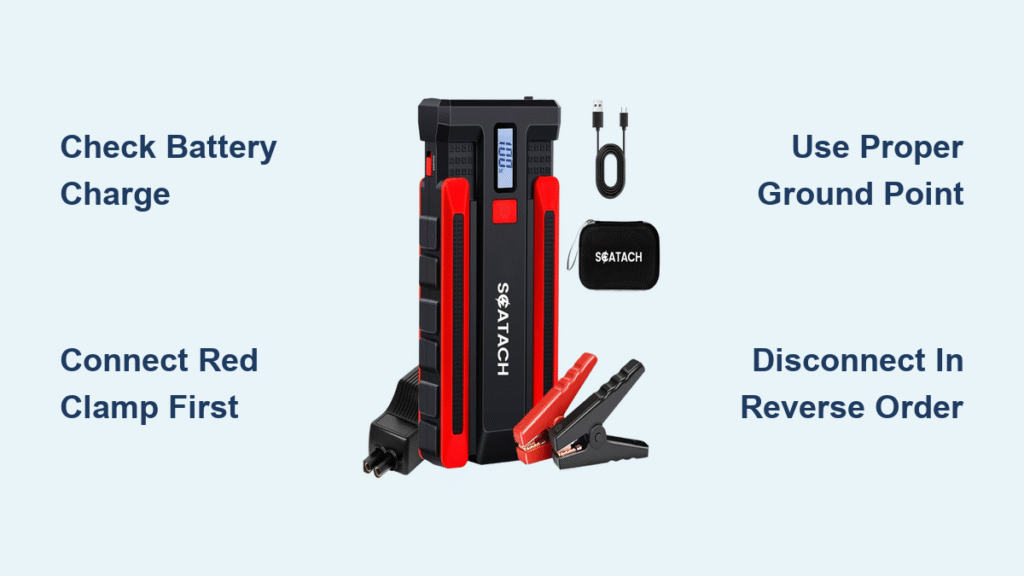
The Scatach jump starter combines multiple emergency tools into one handheld device. The main lithium battery sits in a rubber-protected case that can survive drops from chest height. Red clamp = positive (+), black clamp = negative (-)—memorize this color coding to prevent dangerous mistakes.
Understand the power indicators:
– Solid green “Ready”—safe to jump start your vehicle
– Flashing red “Error”—check your connections immediately
– Solid blue “Charging”—USB devices are drawing power
– No display—unit needs charging or has internal failure
Additional ports serve critical emergency purposes:
– USB-A QC 3.0—fast-charges phones and tablets during emergencies
– USB-C PD—powers laptops up to 60W for work continuation
– 12V DC—runs tire inflators or car vacuums when needed
– LED flashlight—400 lumens with strobe and SOS modes for roadside safety
Correct Connection Steps for Jump Starting Dead Battery

Position the unit safely—place the Scatach on a stable surface near your battery but away from moving engine parts. The 12-inch cables give you flexibility, but don’t stretch them tight or allow them to dangle near fans or belts.
Identify battery terminals correctly—look for red plastic covers marked “+” on the positive terminal and black or uncovered negative terminal. Some batteries have both terminals covered—remove covers to expose the metal posts.
Connect red clamp first—firmly attach the red positive clamp to the positive battery terminal. You should feel it bite into the metal post. Wiggle it gently—it shouldn’t move or spin. This is your first critical connection point.
Connect black clamp to proper ground—never connect directly to the negative battery terminal. Instead, find an unpainted metal surface on the engine block or chassis—bolt heads, brackets, or strut towers work perfectly. This reduces spark risk near potentially explosive battery gases.
Activation and Engine Starting Process
Once both clamps are secure, the Scatach display should show a solid green “Ready” light within 3 seconds. If you see any red indicators or error codes, recheck your connections immediately—this safety feature prevents dangerous operation.
Press the Boost button—this engages the high-current mode necessary for starting. You’ll hear a faint click from the unit as it prepares to deliver power. This is your signal that the unit is ready to jump-start your vehicle.
Start your engine properly:
– Turn your key or press the start button
– Engine should crank immediately
– Limit cranking to 3-5 seconds maximum per attempt
– Wait 30 seconds between attempts if the first try fails
Most engines start within the first 1-2 attempts. If you hear rapid clicking instead of cranking, your battery might be too far gone, or you have poor connections—recheck your clamp placement before trying again.
Safe Post-Start Disconnection Procedure
Let your engine idle—after successful starting, run your vehicle for 2-3 minutes before disconnecting. This stabilizes the electrical system and prevents voltage spikes that could damage sensitive electronics.
Disconnect in strict reverse order:
1. Black clamp first—remove from the grounding point
2. Red clamp second—remove from positive terminal
3. Close hood—ensure it latches securely
4. Store unit properly—place back in carrying case
Critical tip: Drive your vehicle for at least 15 minutes after a jump start. This allows your alternator to recharge the battery and prevents getting stranded again with the same dead battery.
Avoid These Common Scatach Connection Mistakes

Reversed polarity happens when you mix up positive and negative connections. The Scatach will beep and flash “Reverse Polarity”—immediately disconnect and swap the clamps. Never ignore this warning—reversed connections can damage both your vehicle and jump starter beyond repair.
Poor ground connections cause weak or no power delivery. If your engine barely turns over, try a different grounding point. The engine block usually provides the best connection—clean off paint or rust with a wire brush for optimal contact.
Frozen battery danger—never attempt to jump start a battery that’s visibly frozen or below 0°F. Wait for it to thaw naturally or call for roadside assistance. Frozen batteries can explode when jump started due to hydrogen gas buildup.
Maximize Built-in Emergency Features
Activate the LED flashlight—hold the power button for 3 seconds to turn on the 400-lumen light. Press again to cycle through steady, strobe (2 flashes/second), and SOS patterns. The light auto-shuts off after 30 minutes to preserve power for critical needs.
Use power bank functions—after a successful jump start, the Scatach still has plenty of power left. Charge dead phones via USB-A QC 3.0 or power a laptop using the USB-C PD port—perfect for calling for help or continuing work during roadside emergencies.
Power essential accessories—the 12V DC port runs any 12V device up to 120 watts. Use it to inflate tires with a portable compressor or power a small cooler while waiting for help—turn your jump starter into a complete roadside emergency station.
Maintenance for Reliable Scatach Performance
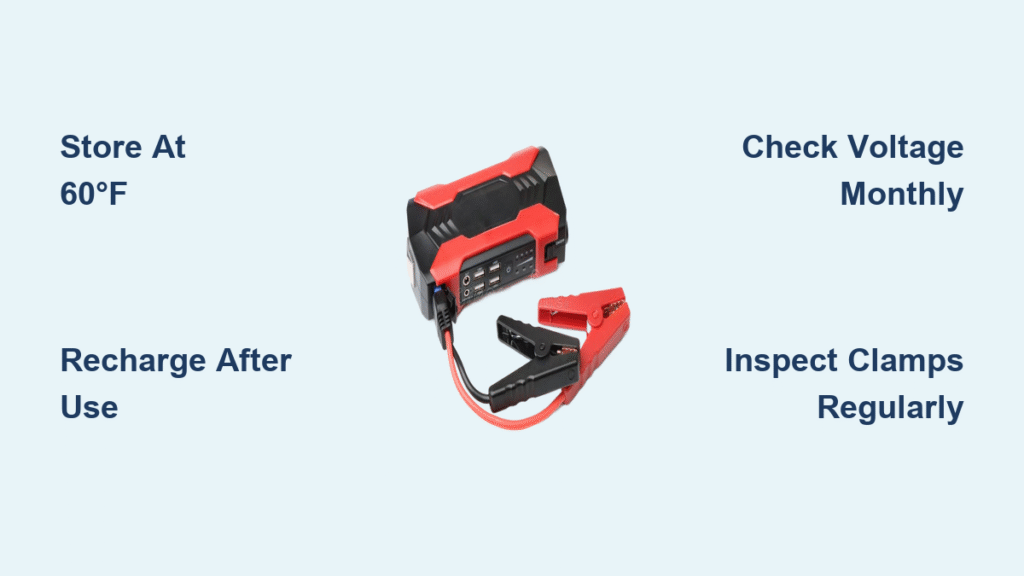
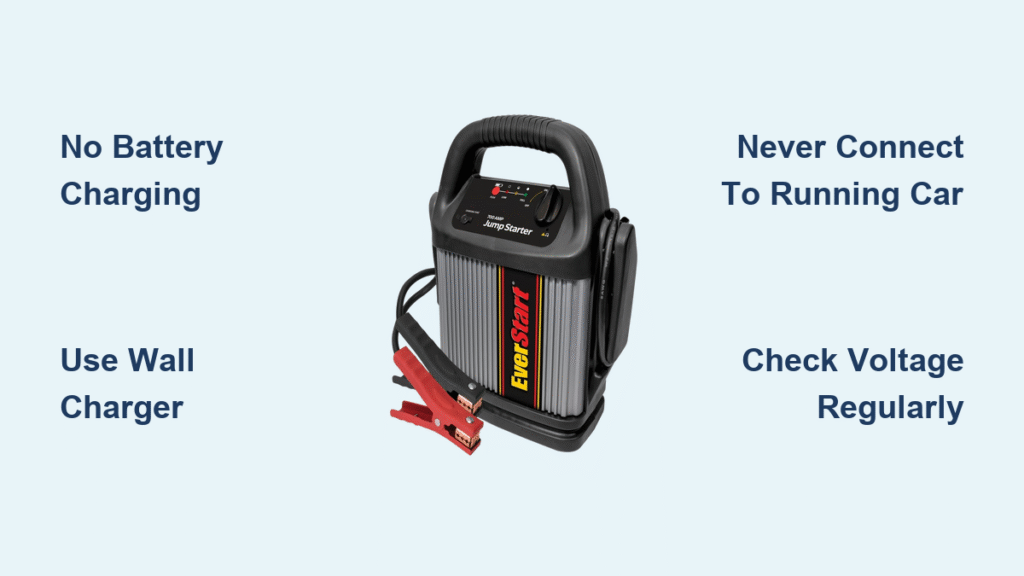
Charge every 3-4 months even if unused. Lithium batteries lose about 30% charge over 6 months sitting in a hot car. Set a calendar reminder—this simple step prevents 80% of jump starter failures when you need it most.
Clean clamps monthly—use a wire brush or sandpaper to remove corrosion buildup. Green or white deposits reduce conductivity and can cause starting failures when you least expect them.
Store properly—keep between -4°F to 140°F for storage, but operate only between 32°F to 104°F. Your glove box works perfectly year-round in most climates—never store in the trunk where temperatures can exceed safe limits.
Troubleshooting Failed Jump Start Attempts
“Low Battery” warning after charging—perform a full discharge/recharge cycle. Use the USB ports to drain the battery completely, then recharge fully. This recalibrates the battery management system and resolves most false low-battery readings.
“Over Temperature” alert—let the unit cool for 30 minutes. This usually happens after multiple jump attempts or use in hot weather. Never wrap it in blankets or store in direct sunlight—allow natural cooling for safe operation.
Engine cranks but won’t start—your battery might be good, but other issues exist. Check for:
– Fuel—do you have gas?
– Security system—is your immobilizer active?
– Loose terminals—wiggle your battery cables
Your Scatach jump starter can transform a dead battery from a day-ruining crisis into a 5-minute inconvenience. Keep it charged, know these steps, and you’ll never be stranded by a dead battery again. The confidence of knowing you can get yourself moving without waiting for roadside assistance makes this small device worth its weight in gold—master how to use Scatach jump starter properly, and you’ll always have the power to get back on the road.