You’re late for an important meeting when your car refuses to start—just clicking sounds echo as you turn the key. That sinking feeling hits you: a dead battery has left you stranded in the parking lot. Instead of waiting hours for roadside assistance, your Yaber jump starter can get you back on the road in under five minutes. These compact power banks deliver enough amperage to revive dead batteries while serving as emergency power sources for your devices.
This practical guide shows you exactly how to use your Yaber jump starter safely and effectively, whether you’re facing your first dead battery emergency or troubleshooting why it didn’t work during your last roadside crisis. You’ll learn proper connection techniques, avoid dangerous mistakes, and maximize your device’s lifespan—turning automotive anxiety into confidence.
Essential Safety Precautions Before Connecting
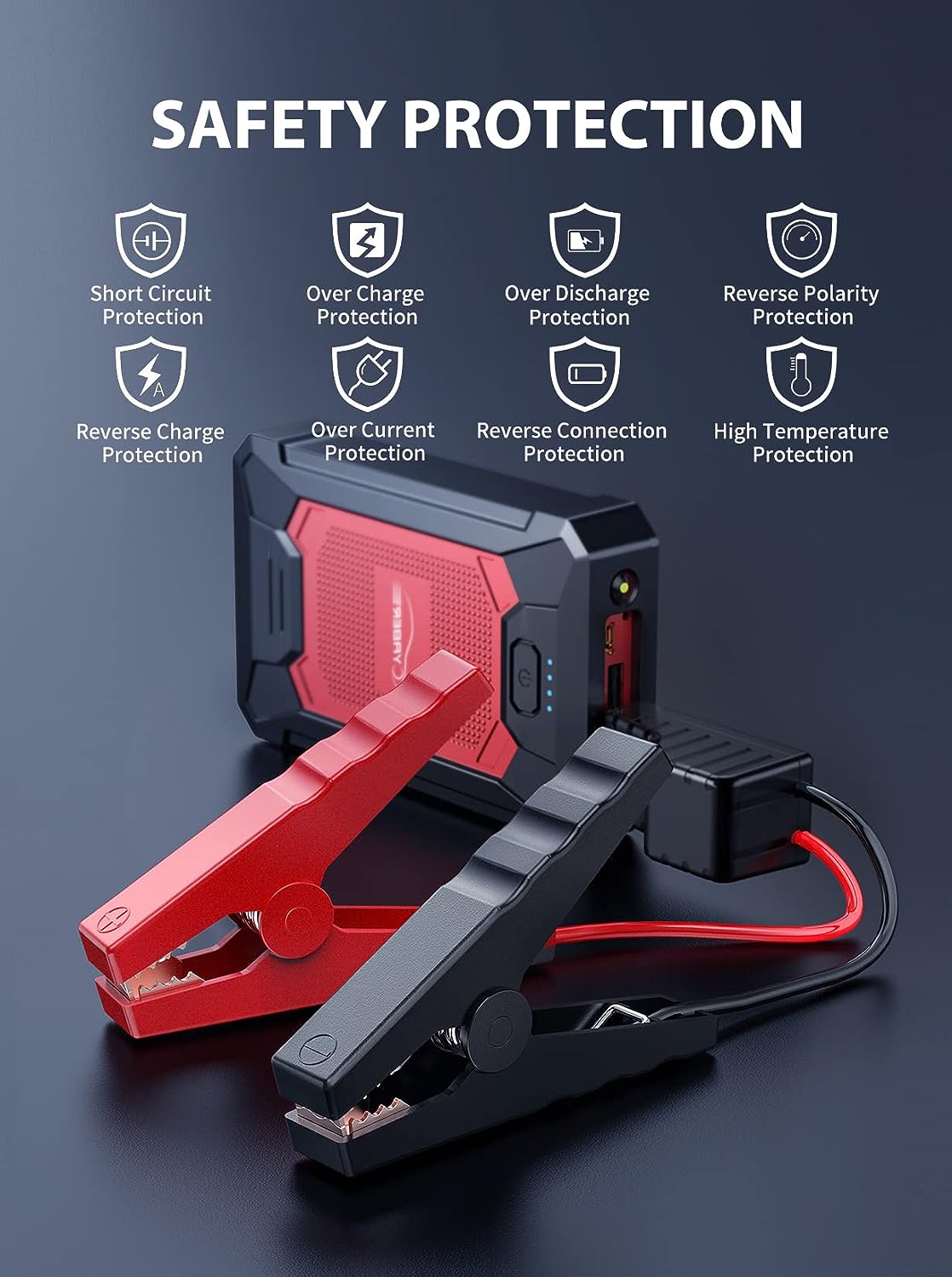
Before touching any cables, park your vehicle in a safe location away from traffic and engage the parking brake. Turn off all electrical accessories—headlights, radio, and climate control—to prevent power drain during the jump process. Yaber jump starters include multiple safety features, but proper handling prevents dangerous sparks and protects your vehicle’s sensitive electrical system.
Critical safety rules you must follow:
– Never connect clamps while the jump starter is powered on
– Keep metal objects away from battery terminals to prevent short circuits
– Inspect cables for fraying or exposed wires before each use
– Work in well-ventilated areas—car batteries release explosive hydrogen gas
Required Equipment Check Before Emergency Use
Your Yaber jump starter kit contains the main unit, smart battery clamps with safety indicators, a USB-C charging cable, and a protective carrying case. Some models include additional accessories like wall chargers or car adapters. Before relying on it during an emergency, verify your jump starter shows at least 75% charge on the LED display—lower levels may not provide enough power for larger engines, especially in cold weather.
Pre-use inspection checklist:
– Battery clamps snap securely onto terminals without wobbling
– LED indicators light up when pressing the power button
– No visible damage to cables, clamps, or the unit housing
– All ports are clean and free of dirt or debris
Step-by-Step Jump Starting Process for Immediate Results
Position Your Yaber Unit Correctly
Place the jump starter on a stable, non-conductive surface near your battery—never inside the engine bay where moving parts could damage it. Ensure cables reach comfortably without stretching or pinching against sharp edges. For best results, position the unit on the ground beside your vehicle rather than on the engine cover.
Connect Battery Clamps in Proper Sequence
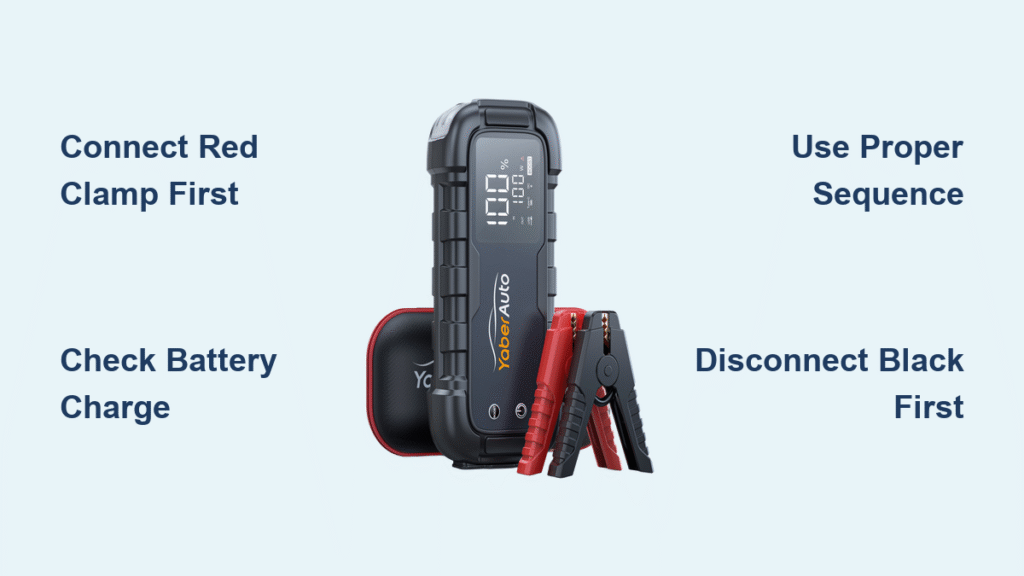
Identify your battery’s positive (+) terminal (usually marked red) and negative (-) terminal (typically black or marked with a minus sign). Connect the red clamp to the positive terminal first, then the black clamp to the negative terminal. The smart clamps’ design prevents reverse polarity with visual and audible alerts, but always double-check connections before proceeding.
Activate Jump Start Mode Safely
Press and hold the power button for 3 seconds until the LED display shows “READY” with green indicators. The unit automatically performs a safety check—flashing red lights indicate issues like reversed connections or low internal temperature. Never bypass these safety checks unless absolutely necessary in emergency situations.
Start Your Engine with Proper Timing
Turn your ignition key or press the start button normally. Most engines fire within 3-5 seconds. If unsuccessful, wait 30 seconds between attempts to prevent overheating the jump starter. After successful starting, let your engine idle for 2-3 minutes before disconnecting to ensure your alternator begins recharging the battery.
Troubleshooting Common Jump Starter Issues
No Response When Connected to Battery
Check that clamps make firm metal-to-metal contact with clean battery terminals—corrosion or loose connections prevent power transfer. Clean terminals with a wire brush if needed. Verify your jump starter displays sufficient charge; below 50% may not start larger engines, especially in cold weather conditions.
Engine Turns Over Slowly Despite Connection
Cold weather significantly reduces battery performance. Move the jump starter to a warmer location (like your passenger seat) for 10-15 minutes before retrying. For diesel engines or large V8s, ensure you’re using a Yaber model rated for your engine size—check the specifications label on your unit against your vehicle’s requirements.
Sparks or Heat During Connection Process
Immediately disconnect if you see sparks or smell burning—this indicates poor connections or potential electrical issues. Inspect battery terminals for damage and ensure clamps aren’t touching each other or metal surfaces. Never force clamps onto terminals; proper contact should feel secure without excessive pressure.
Post-Jump Care and Proper Storage Practices
After successful starting, disconnect clamps in reverse order: black clamp first, then red clamp. Power down your Yaber unit by pressing the power button once. Recharge the jump starter within 24 hours—partial discharges reduce overall battery lifespan and reliability for future emergencies.
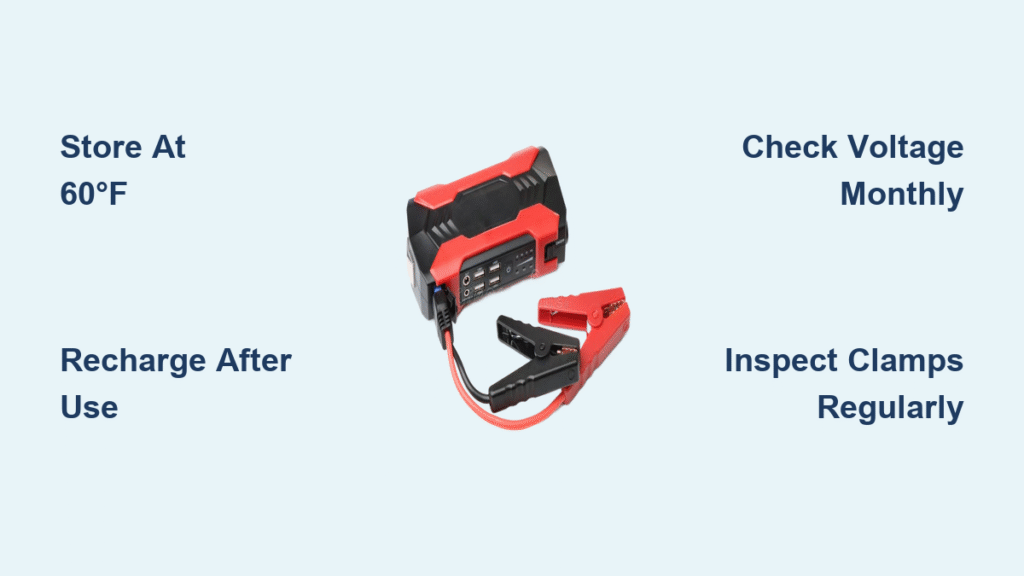
Optimal storage practices for maximum readiness:
– Maintain 40-80% charge for long-term storage periods
– Store in your glove compartment or trunk at moderate temperatures
– Check charge level every 3 months even if unused
– Avoid leaving in extreme heat (above 120°F) or freezing conditions
Using Yaber as Multi-Device Power Bank

Your jump starter doubles as a high-capacity emergency power source for phones, tablets, and laptops. The USB-A and USB-C ports provide fast charging—simply connect your device’s cable and press the power button. The LED display shows remaining capacity, helping you preserve enough power for emergency jumps while keeping your devices operational.
Power bank best practices:
– 20000mAh models typically charge most smartphones 4-6 times
– Use USB-C port for fastest device charging capabilities
– Turn off unused ports to conserve emergency power
– Never attempt device charging while jump starting another vehicle
Advanced Features for Emergency Situations
LED Flashlight Functions for Nighttime Emergencies
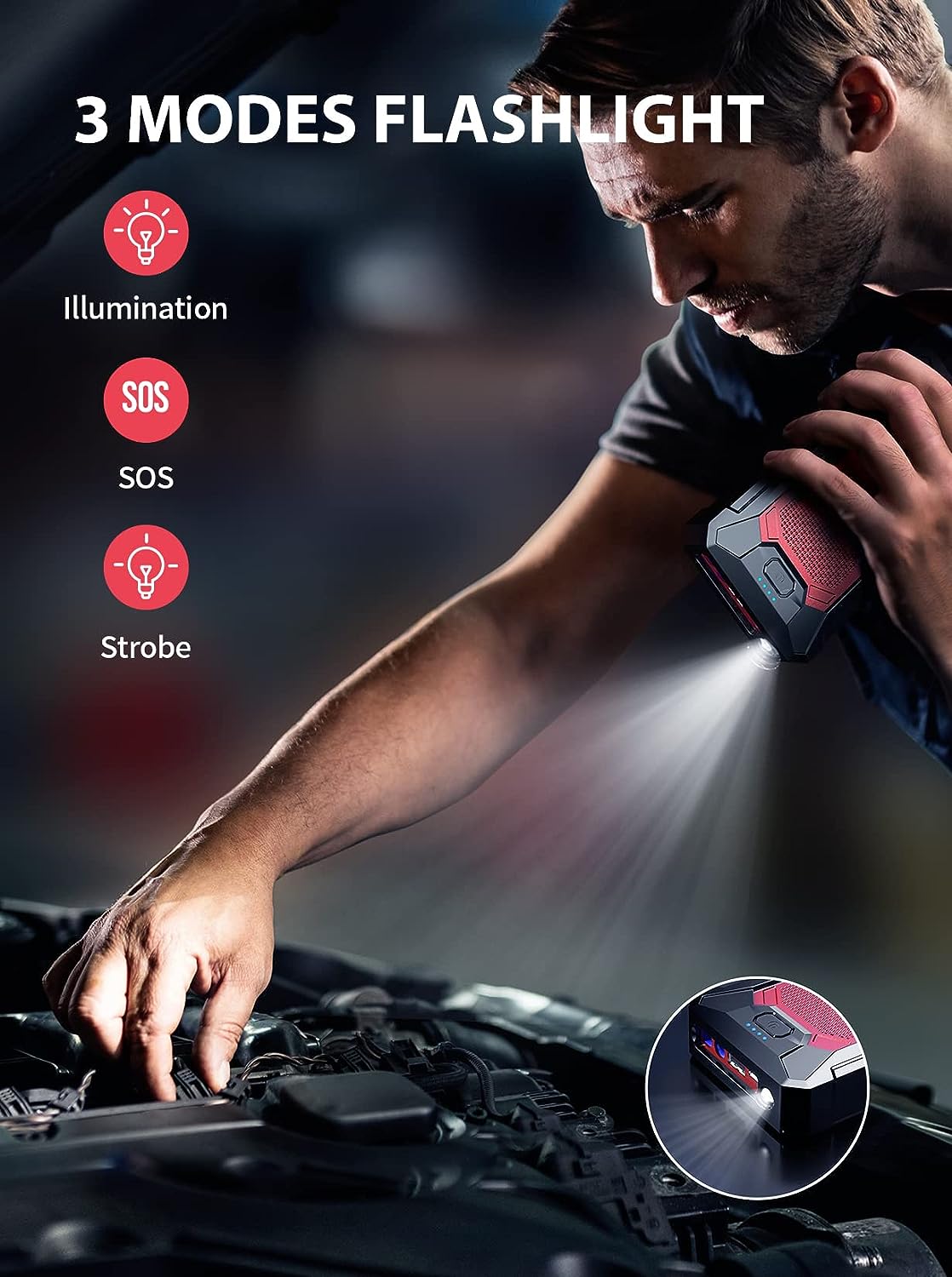
Hold the power button for 5 seconds to activate the built-in flashlight. Double-press the button to cycle through steady, strobe, and SOS modes. The 400-lumen LED provides up to 72 hours of continuous light—essential for nighttime breakdowns, roadside repairs, or signaling for help.
Manual Override Mode for Severe Battery Discharge
For critically discharged batteries that won’t respond to standard jump starting, hold both clamp release buttons for 5 seconds to bypass safety checks. Use this emergency mode only when standard procedures fail, as it temporarily disables reverse polarity protection. The display flashes red to indicate override activation—reconnect properly if possible.
Temperature Protection System Explained
Yaber units automatically shut down in extreme temperatures to protect internal components. If the display shows “HOT” or “COLD,” move the unit to a shaded area or warm location. Operation resumes automatically when internal temperature normalizes—typically within 10-15 minutes in moderate conditions. Never force operation during temperature warnings.
Emergency Scenarios and Practical Solutions
Multiple Jump Attempts Without Success
If your battery fails to hold a charge after multiple jumps, drive for 20-30 minutes to allow your alternator to recharge it fully. Persistent starting issues indicate alternator problems or a completely failed battery requiring replacement—don’t rely on repeated jump starts as a long-term solution.
Sharing with Other Drivers Safely
Your Yaber unit can assist other motorists, but verify their vehicle’s engine size compatibility first. Most Yaber models handle up to 7.0L gas or 5.5L diesel engines. For hybrid vehicles, consult the owner’s manual—some require specific jump starting procedures due to complex electrical systems.
Complete Electrical Failure Diagnosis
When dashboard lights don’t illuminate even with a jump starter connected, check your vehicle’s main fuse or ignition switch. This indicates broader electrical issues beyond simple battery failure—professional diagnosis becomes necessary if basic jump starting doesn’t resolve the problem.
Regular testing ensures your Yaber jump starter remains reliable when you need it most. Keep it charged and accessible in your vehicle—you’ll use it more often than you think, potentially saving hours of waiting for roadside assistance during inconvenient breakdowns. A fully functional jump starter transforms automotive emergencies from stressful ordeals into quick, manageable situations you can handle yourself.